
DAVOS ONLINE
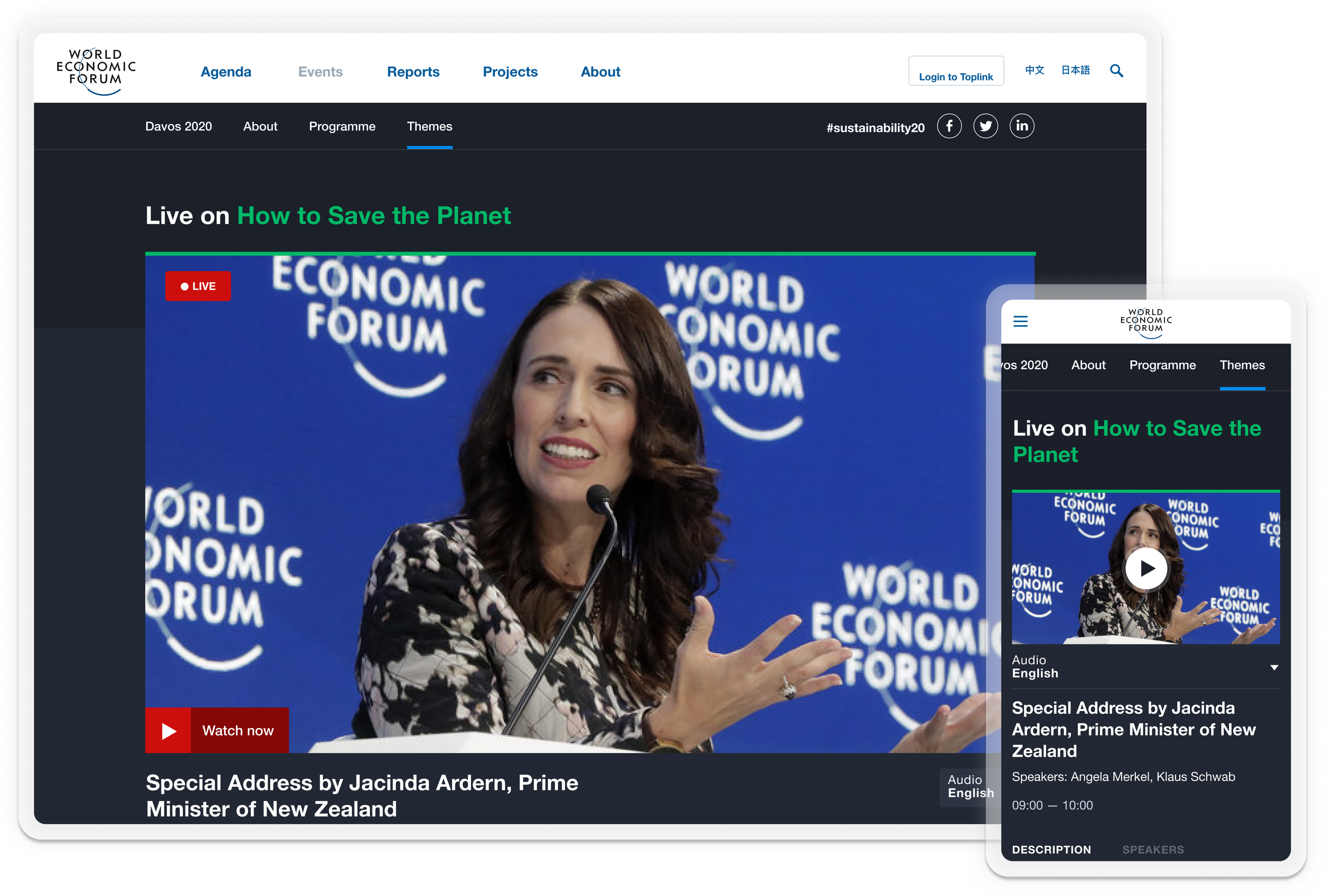
ABOUT
PROJECT DETAILS
YEAR: Nov 2019 — Jan 2020
INDUSTRY: Editorial, International Events
MY ROLE: UX Research, Prototyping and Testing, UX/UI Design
TEAM: Lead Designer (me) | PM | FullStack Engineer
PLATFORM: Web (Responsive)
Every year, Davos brings together 3,000 participants from around the world and aims to facilitate collaboration and discussion on various topics but it increasingly fell to engage with its global online audience.
CHALLENGE
The event experience online traffic had been down by 1/3rd in 2019 and we were tasked with designing a new experience that would be attractive to remote users and increase engagement pre, during and post-event.
SOLUTION
I redesigned the online event experience from the ground up to reflect the needs of a global audience that, in 2020, was keen to see more transparency and impact from major political and business events like Davos.
I worked closely with software engineers and the World Economic Forum digital and content teams to design an online experience that is as rewarding and engaging as the physical experience of being at Davos.

A Remote, Audience-Centric Experience
We began by interviewing a diverse group of Davos audience members who were already familiar with the event to gain a deeper understanding of:
How audiences engage with political and business events online
What matters most to remote participants before, during, and after an event
Key pain points in the existing Davos online experience
Building on these insights, we conducted co-design workshops with the same participants.
Using modular UI components on a digital canvas, users were guided to design their ideal online event experience across the pre-event, live, and post-event phases. This approach ensured the final concepts were grounded in real user needs and behaviours.

Information and Data Driven Hub
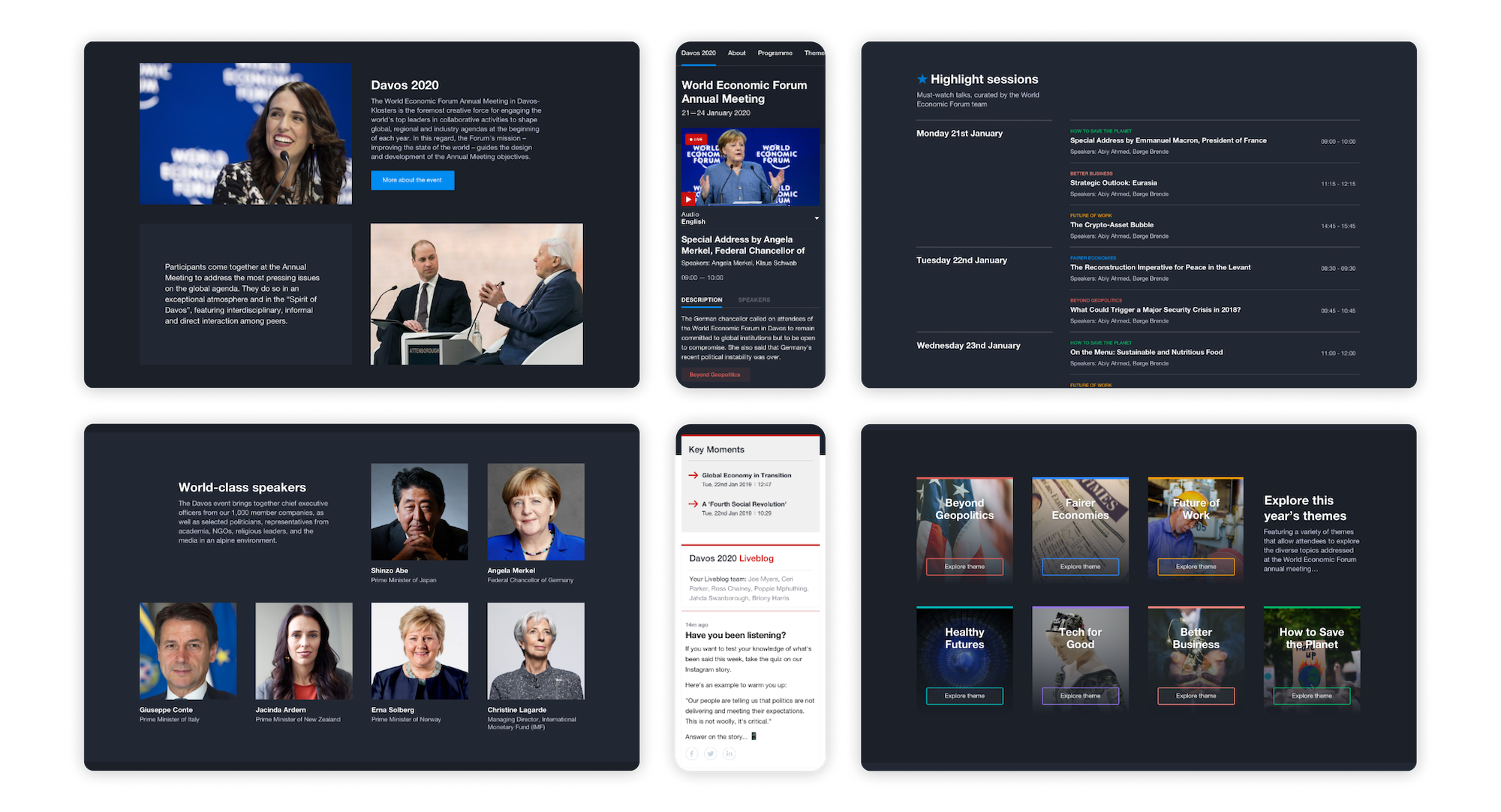
Through research, we discovered that fast, frictionless access to event information — including dates, speakers, themes, and session details — was critical for remote audiences. Users wanted to plan ahead, identify relevant highlight sessions, and schedule time to join live streams as they happened.
In response, we designed the platform as an information-rich, data-driven hub that prioritised clarity, discoverability, and relevance.
The homepage actively encourages exploration of curated topics and featured sessions, enabling audiences to engage meaningfully with the content even before the event begins. This shift transformed the experience from a passive livestream destination into a proactive planning and discovery tool.
Making Live and Past Sessions Discoverable
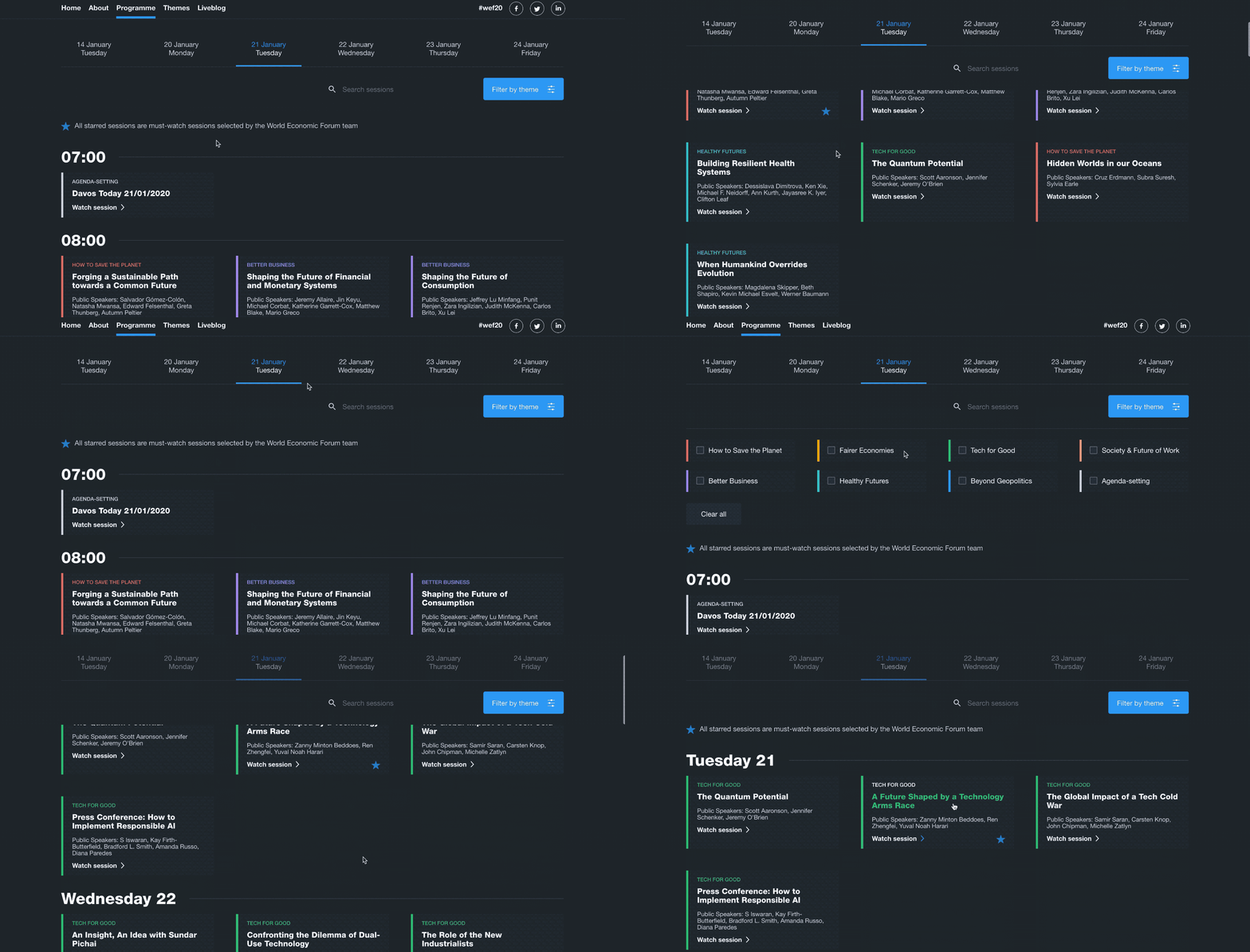
To help users navigate a dense and fast-moving agenda, we introduced a brand-new, colour-coded event programme that makes sessions instantly scannable at a glance.
The programme is fully searchable and filterable by theme and day, empowering users to quickly surface the sessions most relevant to them. Whether planning ahead, joining live discussions, or catching up on past sessions, audiences are given intuitive tools to explore the content efficiently and confidently.
This approach ensures that both live and on-demand content remain equally discoverable — extending the life and value of each session beyond its scheduled time slot.
A Curated Event Experience
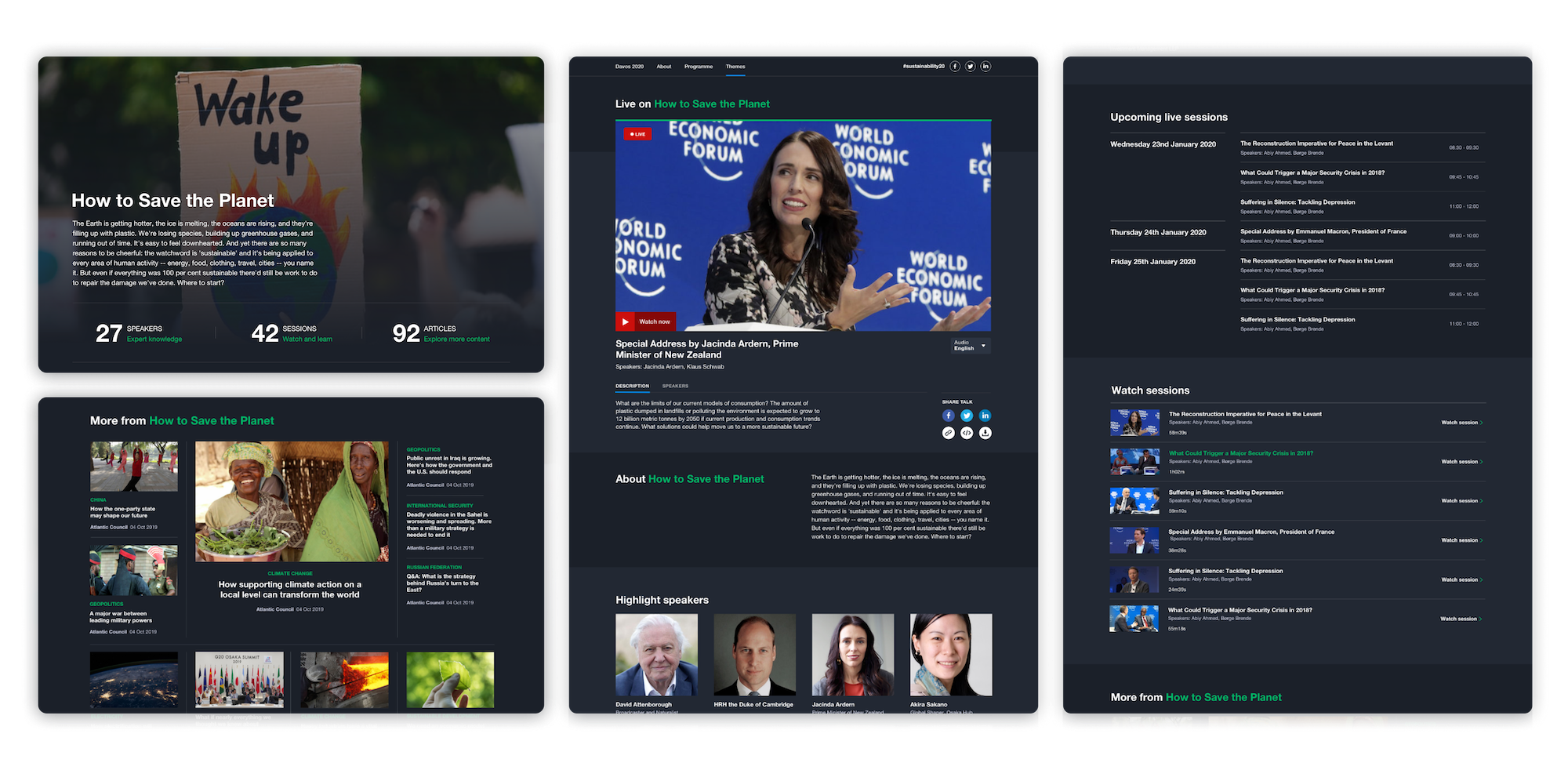
Themes are the cornerstone of Davos. They reflect what the global political and business community cares most about and create the narrative for the event.
The new experience needed to help users navigate through the website, helping them find the most relevant sessions easily. We redesigned the experience with themes in mind, providing a dedicated and colour coded “hub” page for each of them. These theme hubs made it easier for the Forum content team to promote related content and for the remote audience to dive into any of these themes.
Project Outcomes
We were given just 2.5 months to redesign and build the new experience, with the January 2020 Annual Meeting in Davos as a fixed, immovable deadline.
Within that timeframe, we conducted user interviews with a globally diverse group of participants and redesigned and built the entire platform from the ground up — from strategy and UX to final implementation.
The impact was immediate. During the five-day event, 1.2 million users visited the website.
As of early 2026, the platform remains live and continues to support the annual meeting of the World Economic Forum. Its continued use year after year is a strong testament to the quality, relevance, and durability of the experience — one that still serves millions of people around the world annually.